| |||||
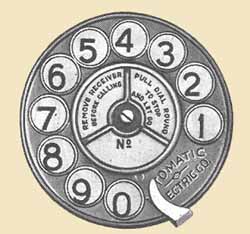
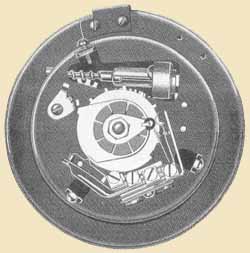
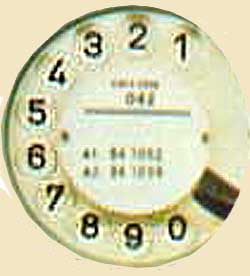
Australian DialsFor many years Australia did not have the capacity to manufacture its own dials, so they were imported from a range of companies. The first dial used was on the Automatic Electric telephones used at the Geelong exchange. They are readily identifiable by being smaller than the later dials, and having the distinctive three-spoked centre that led to them being called "Mercedes" dials.
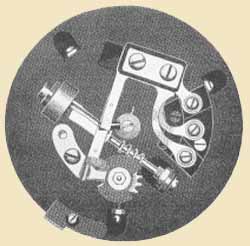
Photos courtesy Bob Freshwater at http://www.britishtelephones.com/dials/dialfile.html#no8
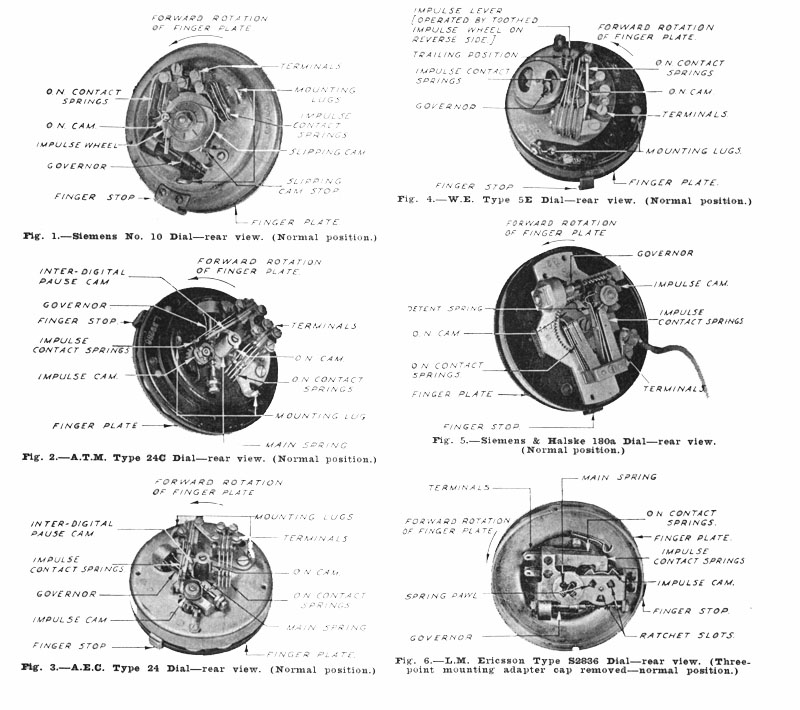
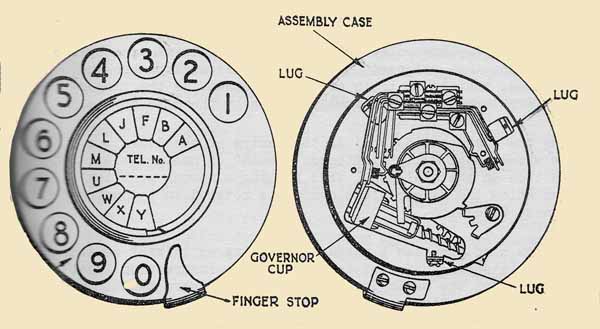
Following this, Australia sourced most of its telephones from Britain. A range of British dials was imported, either built into phones or as maintenance spares. The next illustration is from the Telecommunications Journal of Australia, October 1947, and shows dials used up to that time. The Ericsson dial included a rear protective cap which made it stand out a little further from the phone's surface.
Front view, Siemens No. 8 dial. Note the smaller centre, which carried through onto the earliest No. 10 dials in Britain. The No. 8 dial has four terminals, the No. 10 has five. Rear view: Courtesy Bob Freshwater at http://www.britishtelephones.com/dials/dialfile.html#no8
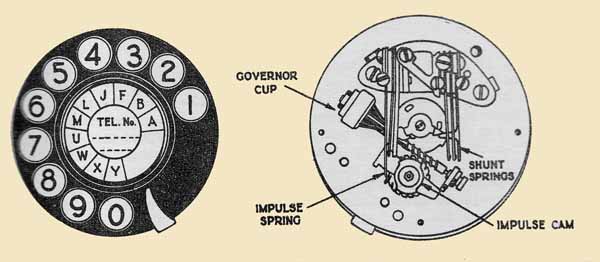
Above: No. 10 and No. 12 dials had a larger centre. Standard design from most makers. Source: Australian Post Office "Telephony" 1951
Above: No. 24C dial from Automatic Electric . Source: Australian Post Office "Telephony" 1951
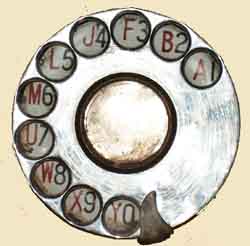
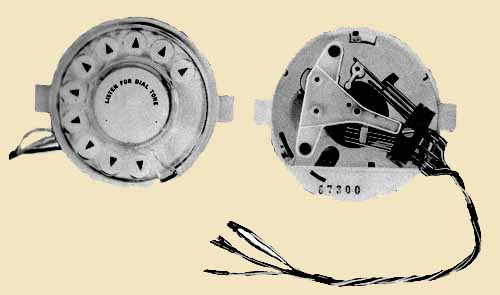
With the introduction of the 800 series telephones in the 1960s, newer plastic dials were introduced. Again, these were imported until an Australian dial could be developed. Because of the different construction between models they were mounted with an adapter plate. This put different numbers at the top of the dial, depending on the brand. The next illustration shows the adapters.Source: "Technicians Handbook: Maintenance and Circuits" APO 1969
These imported dials were replaced within a few years by the Australian-designed and manufactured DMS-1 (Dial, Multi-speed) shown above. Apart from some dials on speciality phones, this was the last dial used on Australian phones. Speciality Dials: The short-lived 2/6 and 4/11 intercoms used a German dial from T&N which had a slightly larger centre than the usual dials.
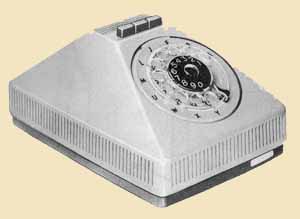
Ericsson dials appeared on some imported phones. Their most notable characteristic is the extra ring of numbers embossed into the dial centre. This example is shown on an Ericovox loudspeaking telephone.
For more detail on many of these dials and full information on British dials, go to Bob Freshwater's Dial File at http://www.britishtelephones.com/dial1.htm#d10
| |||||